
News
Not All Lifting Equipment Is Created Equal: Engineering the Difference for GLAD 2026

Global Lifting Awareness Day (GLAD) 2026 challenges the lifting industry to confront an essential truth: not all lifting equipment is created equal. While many products may appear comparable on the surface, performance, safety, longevity, and suitability for demanding applications can vary dramatically depending on how equipment is engineered, specified, and used.
Across the pewag UK group, (pewag UK, Modulift, Load Monitoring Solutions & Aberdeen Web), we supply lifting solutions that demonstrate exactly why informed specification and quality design matter. From intelligent load control and monitoring to custom‑engineered beams and enhanced sling protection, these products go beyond “fit for purpose” – they are designed for the realities of complex lifting.
Active Load Control: pewag Load Balancer
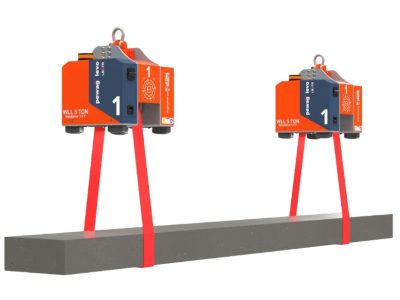
Traditional lifting methods often rely on fixed geometry and manual adjustment, which can be inefficient, imprecise, and risky when dealing with asymmetric or highly complex loads. pewag’s hydraulic Load Balancer represents a step change in how such lifts are managed.
Designed to automatically equalise loads between multiple lifting points, the Load Balancer allows real‑time correction of load distribution during the lift. This ensures individual lift points are not unintentionally overloaded and helps maintain stability throughout critical phases of the operation. For heavy, irregular, or high‑value loads, this level of control significantly reduces risk while improving efficiency and confidence.
The Load Balancer is a clear example of how advanced engineering transforms lifting equipment from a passive component into an active safety system – reinforcing GLAD’s message that specification decisions have lasting consequences onsite.
When Standard Does Not Apply: Modulift Custom Design
While modular lifting/spreader beams provide exceptional flexibility, there are applications where no standard solution exists. This is where Modulift’s custom design capability demonstrates the difference between generic equipment and purpose‑engineered lifting solutions.
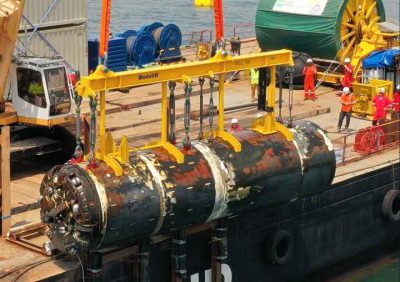
From record‑breaking lifts in the offshore wind sector to custom frames designed for challenging subsea recoveries and heavy civil engineering works, Modulift’s custom-designed beams are created to address unique load characteristics, interfaces, environments, and installation constraints. Each design is underpinned by detailed engineering analysis, ensuring structural efficiency, controlled load paths, and full compliance with applicable standards.
Projects such as custom frames for wave‑affected marine lifts or specialist beams for recovering micro‑tunnelling machines show how early engineering involvement and clear specification can eliminate uncertainty long before the lift takes place. In the context of GLAD 2026, these solutions highlight the importance of buying equipment designed for the job – not adapting equipment beyond its intention.
Protection Where It Matters: Aberdeen Web Tough Outer Sleeves
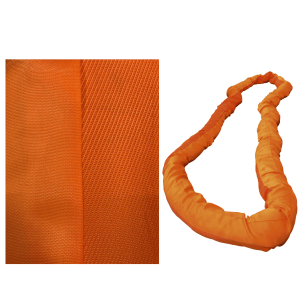
Lifting slings are often viewed as consumables, yet their performance and failure can be dictated by external damage rather than load alone. Aberdeen Web’s tough outer sleeve technology addresses one of the most common causes of sling degradation: abrasion.
Engineered to provide enhanced resistance to cutting, wear, and environmental damage, these outer sleeves significantly extend sling service life while maintaining load-bearing integrity. In harsh industrial environments, abrasion damage may not always be immediately visible, making proactive protection a critical safety measure.
This is a powerful reminder that not all slings or sling protection are equal. Seemingly minor design differences can have a major impact on inspection intervals, reliability, and overall safety performance, aligning closely with GLAD’s emphasis on informed purchasing and lifecycle thinking.
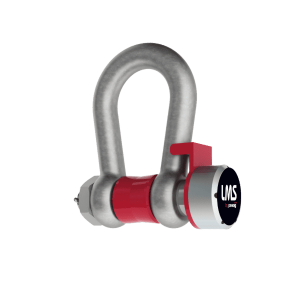
Data in Tight Spaces: LMS Load Pin Shackle
Modern lifting operations increasingly depend on accurate load data, yet conventional load links are not always practical – particularly where rigging space is limited. The LMS Load Pin Shackle solves this challenge by integrating load measurement directly into the shackle pin itself.
Compact but highly capable, the Load Pin Shackle provides real‑time load monitoring without altering the rigging arrangement. Operators can set alarms to warn when loads approach or reach Working Load Limit thresholds, reducing the risk of overload and enabling informed decision‑making during high‑capacity lifts.
By ensuring critical load data is available even in confined environments, the Load Pin Shackle illustrates how thoughtful design can remove compromises between safety, functionality, and practicality.
GLAD 2026: Making Better Choices Before the Lift
GLAD 2026 highlights that the most important lifting decisions are often made long before a load leaves the ground – at the point of specification and procurement. The products highlighted across the pewag UK group demonstrate how engineering detail, clarity of purpose, and quality design directly influence safety outcomes.
Whether through active load balancing, custom solutions, enhanced sling protection, or digital load monitoring, these technologies prove that not all lifting equipment is created equal – and those differences matter.
This Global Lifting Awareness Day, the message is clear: better information leads to better choices, and better choices lead to safer lifts.
Join the conversation and support GLAD 2026 by sharing best practice, raising awareness, and using #GLAD2026.